Chairperson and Chief Executive Overview
Foreword
We are pleased to present the Skillnet Ireland Annual Report for 2025, a year in which Ireland reached record levels of employment, highlighting the continued resilience of both domestic enterprise and the multinational sector. Geopolitical instability, technological disruption, rising cost pressures and the accelerating green and digital transitions are reshaping the operating environment in this era of uncertainty for enterprise. Talent shortages and skills gaps are compounded by the rapid adoption of digital technologies and artificial intelligence, which is fundamentally altering workforce requirements across sectors and regions. In this context, investment in upskilling and reskilling is central to enabling businesses to adapt, manage risk, and compete effectively. As an enterprise-led organisation, Skillnet Ireland is well positioned to support businesses, particularly SMEs, to meet these challenges.
Throughout 2025, the organisation continued to support enterprise through its agile network model, delivering practical, industry-led workforce development aligned to business needs and national priorities.
Statement of Strategy 2026-2028
During 2025, Skillnet Ireland undertook an extensive multi-stakeholder consultation to inform its new strategy, Empowering Enterprise 2026–2028: A Strategy for Next Generation Capability. Engagement with enterprise, government, and education partners provided valuable insights, shaping a forward-looking vision for a workforce that is skilled, adaptable, inclusive, and prepared for future challenges and opportunities. We extend our sincere thanks to all those who contributed their time, expertise and perspectives throughout the consultation process.
At the heart of this new strategy is a clear commitment to ensuring Irish businesses have the talent they need to succeed in a period of profound change. By deepening collaboration across industry, government and education, we aim to support a more agile, connected and resilient skills ecosystem that underpins regional growth, attracts investment, and enables enterprises across Ireland to thrive.
The new strategy seeks to expand Skillnet Ireland’s services by supporting 100,000 businesses over the course of the coming three years to 2028. Skillnet Ireland will increase its engagement with 15,000 new Irish SMEs including 1,000 start-ups and scale-ups focusing on innovation capability, over the next three years.
2025 Performance Outputs
Driving business competitiveness remained central to Skillnet Ireland’s activity in 2025. Through its enterprise-led network model, Skillnet Ireland delivered workforce development and upskilling aligned to business needs, with a particular focus on enhancing productivity, and building future-ready capability across the economy.
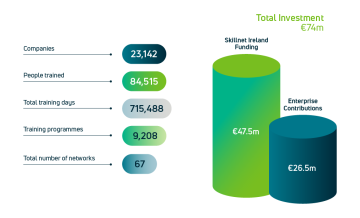
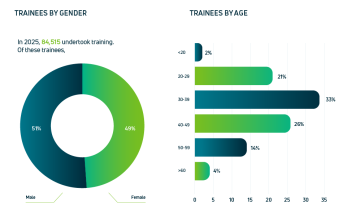
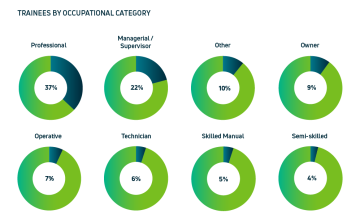
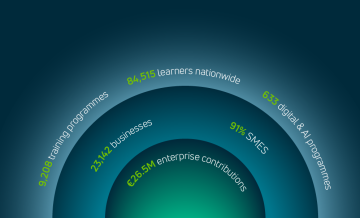
In 2025, Skillnet Ireland, supported 23,142 businesses and 84,515 trainees nationwide. Our Skillnet Business Networks, National Initiatives and EU Projects delivered 715,488 training days across 9,208 workforce development programmes, meeting the targets agreed with the Department of Further and Higher Education, Research, Innovation and Science.
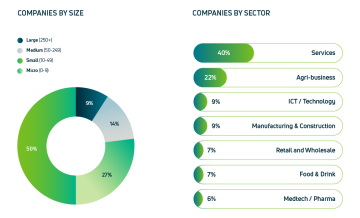
91% of the businesses that Skillnet Ireland provided services to were micro, small and medium-sized enterprises, the backbone of the Irish economy and crucial to its successful progression. SMEs face similar challenges to larger organisations but with fewer resources. Targeted initiatives, such as MentorsWork, which celebrated its fifth anniversary in 2025, and the newly launched Pathways to Innovate initiative, provide practical, tailored supports for SMEs to adopt new technologies, embed innovation capability, and translate ambition into tangible productivity and business growth.
The cost-sharing approach with employers remains a cornerstone of the Skillnet Ireland model and demonstrates strong and sustained enterprise commitment to skills development. In 2025, companies contributed €26.5 million towards the cost of upskilling programmes. Skillnet Ireland invested a total of €74 million in workforce development during the year. A detailed summary of performance outputs is provided on page 8 of this report.
Supporting Government and EU Skills Policy
Through its industry-led workforce development programmes targeting the digital and green transitions, Skillnet Ireland continued to actively support the objectives of the EU Union of Skills strategy. In 2025, the organisation also continued to play a vital role in supporting the Government’s enterprise and skills agenda, delivering a substantial programme of workforce development activities that responded to Ireland’s evolving economic and labour market needs. Skillnet Ireland progressed a range of assigned actions across key national strategies, including the National Digital Strategy, the National Artificial Intelligence Strategy, the Climate Action Plan, Housing for All, Ireland for Finance, and Ireland’s Offshore Wind Strategy. The organisation also maintained an active role across national advisory and governance structures, including the National Skills Council, the Expert Group on Future Skills Needs and sector-specific capability working groups, supporting evidence-based policy development and alignment between skills supply and demand.
Throughout the year, Skillnet Ireland delivered large-scale, enterprise-led workforce development initiatives in collaboration with government, industry, and higher education institutions. These initiatives included the official launch of Skillnet MMC Accelerate, and the expansion of accredited micro-credentials through the Skillnet Offshore Wind Academy. A wide range of new programmes were developed by Skillnet Business Networks including sustainable cloud computing, electric vehicle maintenance and biodiversity. These initiatives are directly addressing critical capability challenges, supporting productivity, innovation and competitiveness, while developing the specialist skills required to progress national priorities in construction, digitalisation, artificial intelligence and renewable energy.
Addressing Digital and Sustainability Transitions
In 2025, Skillnet Ireland delivered targeted upskilling in areas including AI, data analytics, cybersecurity and automation to strengthen enterprise capability, and support SMEs to adopt new technologies and innovate. In 2025, 12,655 workers and 2,412 companies benefited from digital skills programmes. AI capability development remained a strategic priority, with more than 50 AI programmes delivered by Skillnet Ireland, ranging from foundational training to advanced qualifications, alongside targeted initiatives such as the AI Capability Accelerator for senior leaders. Developing this digital and AI talent pipeline is essential to Ireland’s long-term competitiveness and its position within an increasingly digital global economy.
Addressing the workforce implications of climate change and the transition to a low-carbon economy also remained a core focus of our industry partners. Skillnet Ireland supported 3,822 businesses and 6,974 workers across 50 Skillnet Business Networks and National Initiatives to develop the skills and workforce capabilities required to meet regulatory, sustainability and climate objectives, and to accelerate Ireland’s clean energy ambitions.
Accelerating Competitiveness Through Skills
Looking ahead, Skillnet Ireland is progressing the development of key policy actions under its enhanced mandate for workforce development. This includes the planned introduction of an SME Upskilling lncentivisation Scheme to boost AI capability, a National AI Upskilling Initiative and an Offshore Wind Career Development platform, further reinforcing the organisation’s role in delivering responsive, future-focused skills solutions at a national level.
Creating the environment for balanced regional development also remains a core organisational priority. Skillnet Business Networks and National Initiatives made a substantial impact across all regions and sectors in 2025. This was exemplified by Skillnet Ireland’s inaugural Ireland’s Talent Landscape Roadshow series which highlighted the reach and impact of enterprise-led workforce development initiatives across Ireland’s Midlands, Mid-West, North-West, and North-East regions.
The provision of skills at the pace and scale required to sustain competitiveness, productivity and employment growth continues to be a challenge for the Irish economy. The capacity of businesses to adapt will depend increasingly on the strength and relevance of their skills base. This underscores the importance of sustained, targeted investment to build the workforce capabilities required for a low-carbon, digital and AI-driven economy. We welcome the Government’s focus on workforce development, alongside the ongoing reform of the National Training Fund, which will be critical to ensure that investment in skills continues to be responsive to the evolving needs of enterprise and the economy.
Conclusion
Over the next three years our work will be underpinned by a focus on organisational agility and excellence, supported by strong governance, accountability, value for money, and evidence-based decision-making. In delivering our new strategy, Skillnet Ireland will enable enterprises to adapt, compete and realise new opportunities in an increasingly complex global landscape. Our partnerships with enterprise, higher education institutions, government and a wide range of national and regional stakeholders remain central to our capacity to deliver measurable impacts for businesses, workers, and the wider economy.
We wish to acknowledge the continued support of An Taoiseach, Micheál Martin TD, Minister for Further and Higher Education, Research, Innovation and Science, James Lawless TD, Minister of State at the Department of Further and Higher Education, Research, Innovation and Science, Marian Harkin, TD, and our colleagues in the Department of Further and Higher Education, Research, Innovation and Science. We also wish to thank colleagues in the Department of Enterprise, Tourism and Employment, IDA Ireland, Enterprise Ireland, SOLAS, the Regional Skills Fora, the Higher Education Authority, and the Further and Higher Education Institutions and the many Government agencies and Departments that Skillnet Ireland collaborated with in 2025.
We would also like to acknowledge Brendan McGinty, our outgoing Board Chairperson, for his outstanding contribution to Skillnet Ireland over more than two decades. His leadership and commitment have played a significant role in shaping the organisation’s growth, value and impact. We also acknowledge the valuable contribution of our outgoing Board members during their tenure, and we warmly welcome our new members. We look forward to their insight and guidance as we embark on the next phase of our strategy.
Finally, we extend our deep appreciation to our many Skillnet Business Network Managers and National Initiative Managers and their teams, our enterprise partners, Skillnet Steering Groups and the Board and staff of Skillnet Ireland for their immense dedication, hard work and achievements throughout 2025.
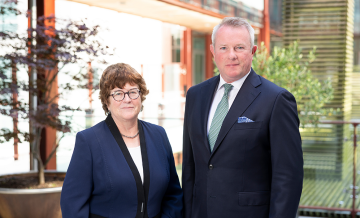
(L-R) Brigid McManus, Chairperson, Skillnet Ireland, and Mark Jordan, Chief Executive, Skillnet Ireland
High Level Outputs 2025
At Skillnet Ireland, we partner with industry to deliver enterprise-led workforce development that strengthens business capability, productivity and competitiveness. Through our nationwide Skillnet Business Network model and National Initiatives, we support businesses of all sizes to build the future-focused skills needed to innovate, adapt and succeed in an increasingly digital, AI-driven and globally competitive economy.
Building Competitiveness Through Skills
Building Next Generation Capability
Skillnet Ireland’s 2026–2028 Strategy sets out an ambitious response to a fast-evolving economic landscape, reinforcing the organisation’s role as the national workforce development agency for enterprise. Central to the strategy is a strong emphasis on future skills and innovation to enhance productivity and support sustainable growth across all sectors. The strategy prioritises collaboration with enterprises and industry bodies to strengthen the competitiveness of Irish firms, and on connecting enterprise needs with labour market policy.
Aligned with national priorities, including the Programme for Government and the Action Plan on Competitiveness, the strategy supports job creation while highlighting the importance of attracting, developing and retaining world-class talent. It also recognises that addressing structural challenges such as housing, transport and energy infrastructure depends on a highly skilled workforce, making continued investment in talent critical.
Through targeted investment in future-ready upskilling, Skillnet Ireland aims to boost innovation, digital capability and business resilience, enabling companies to adapt and thrive in a rapidly changing global economy. Three enablers for business transformation - digitalisation, artificial intelligence and sustainability - are identified as key opportunity areas. The strategy recognises that addressing barriers to AI adoption, particularly skills gaps and implementation challenges, will require coordinated action across government, industry and education.
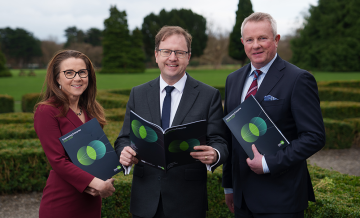
(L-R) Tracey Donnery, Director of Policy & Communications, Skillnet Ireland; Minister for Further and Higher Education, Research, Innovation and Science, James Lawless TD, and Mark Jordan, Chief Executive, Skillnet Ireland.
Skillnet Ireland’s enterprise-led model remains central, supporting both foreign direct investment and indigenous enterprise, while fostering regional development and sectoral growth. A continued focus on lifelong learning underpins the strategy, with a commitment to building an agile and responsive learning ecosystem through enhanced collaboration with government, industry and the tertiary education sector.
Through its ‘Empowering Enterprise: Next Generation Capability’ strategy, Skillnet Ireland aims to support 100,000 companies by 2028, including 15,000 new businesses and 1,000 start-ups and scale-ups focusing on innovation capability. Delivery will be driven by strong partnerships across government departments, enterprise agencies and industry networks, ensuring shared innovation and sustained impact.
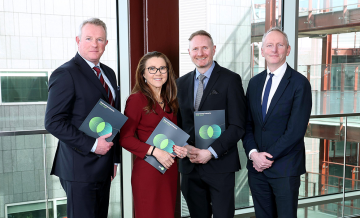
(L-R) Mark Jordan, Chief Executive, Skillnet Ireland; Tracey Donnery, Director of Policy & Communications, Skillnet Ireland; Ken Finnegan, Chief Strategy Officer, Skillnet Ireland; and Dave Flynn, Director of Business Networks, Skillnet Ireland.
Throughout 2025, Skillnet Ireland supported 23,142 businesses and 84,515 learners nationwide through its industry-led model.
We deliver tangible results by enhancing productivity, strengthening resilience, and preparing business leaders and employees for a future shaped by AI, climate action, and innovation. Facilitating effective collaboration between industry, higher education, and training providers remains essential to addressing labour market needs and equipping companies and their teams with relevant, future-focused skills for sustained growth and success.
As the pace of change continues to accelerate, Skillnet Ireland’s role is more important than ever. By developing a strong talent pipeline and championing enterprise-led innovation, we are contributing to a more digital, sustainable, and competitive Ireland, powered by exceptional talent.
Skillnet Ireland has a series of targeted initiatives to support the acceleration of digital transformation and sustainability practices across the economy. In 2025, 12,655 workers benefitted from Skillnet Ireland supported digital skills programmes, with 633 digital and AI-related upskilling programmes delivered across the network. These programmes have a two-pronged focus on developing specialised talent for new or emerging technologies such as AI, and in enabling digital transformation within the SME sector.
Additionally, 3,822 businesses and 6,974 employees engaged in climate and sustainability upskilling programmes. These covered critical areas such as energy management, offshore wind, water stewardship, biodiversity management, sustainable finance and ESG (Environmental, Social, and Governance) reporting. Each programme is designed to support businesses in their decarbonisation efforts.
Building Capability for a Digital and AI-Enabled Economy
CILT Mobility & Supply Chain Skillnet launched a cutting-edge new programme, the Postgraduate Certificate in Applied Artificial Intelligence in Supply Chain Management. The Level 9 NFQ qualification was codesigned in partnership with Atlantic Technological University in response to the growing demand for digitally skilled professionals across many sectors. The programme is tailored for supply chain and logistics professionals who want to lead in the era of AI-driven transformation. The course focuses on equipping participants with hands-on expertise in applying artificial intelligence to real-world challenges such as demand forecasting, risk mitigation, and the development of circular and sustainable supply chains.
Irish Medtech Skillnet rolled out a first-of-its-kind programme designed to equip Ireland’s medtech and manufacturing sectors with the practical tools, expert insight, and strategic clarity needed to drive digital transformation for businesses in these sectors. The pioneering Digital Transformation Simplified programme brings together forward-looking organisations that are ready to take decisive steps toward digital innovation. The programme provides a structured, outcomes-focused journey, starting with a Digital Maturity Assessment and ending with a clear, actionable transformation plan. Over six months, participants will engage in monthly sessions at top-tier industry facilities, learning to assess digital maturity, plan strategically, and execute transformation plans that deliver measurable business value.
Technology Ireland DIGITAL Skillnet launched a Product Management Community of Excellence Initiative for product management experts working in the technology sector. The initiative has been established to centralise best practices, foster continuous learning, and equip professionals with the tools to thrive in a rapidly evolving industry. The community of excellence has been built on the success of Technology Ireland Digital Skillnet’s postgraduate programmes in Product Management, which was co-developed with TU Dublin and delivered successfully over the past 15 years. Participants benefit from events, workshops, and networking opportunities to support ongoing professional development, while alumni from the postgraduate diploma programme are invited to share insights and contribute to a collaborative environment that drives innovation and measurable growth for organisations.
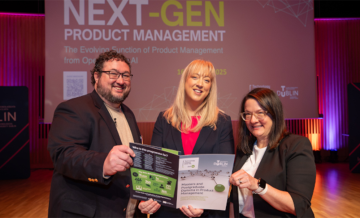
(L-R) John Haggerty, AI & Data Product Leader; Una Fitzpatrick, Network Promoter, Technology Ireland DIGITAL Skillnet, and Denise Tilles, CPO/Founder, Grocket.
Powering Ireland’s Sustainable Future Through Skills Development
Skillnet Offshore Wind Academy, the national initiative developed by Skillnet Ireland in partnership with Wind Energy Ireland, delivered 12 new university accredited micro-credential courses in 2025. Skillnet Offshore Wind Academy’s range of flexible micro-credential courses are targeted at mid-career professionals currently employed who have the potential to transition into offshore renewable energy. In 2025, the Academy targeted priority roles aligned with Ireland’s development stages of offshore wind that include Offshore Project Managers, Ornithologists, Geophysicists, GIS Technicians, Resource Analysts, Offshore EIA Managers, Offshore HV Technicians, and Able Seafarers.
The 12 specialised micro-credential courses, developed in partnership with leading Irish universities, are designed to provide participants with practical skills and recognised qualifications. Each course is crafted to remove barriers to entry, offering accessible pathways into an industry set to transform Ireland’s energy landscape, delivering clean, affordable electricity to homes and businesses while creating thousands of high-value jobs.
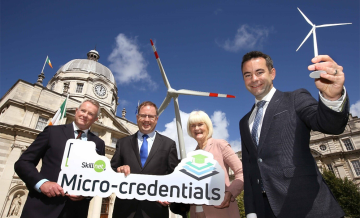
(L-R) Mark Jordan, Chief Executive, Skillnet Ireland; Minister for Further and Higher Education, Research, Innovation and Science, James Lawless TD; Minister of State at the Department of Further and Higher Education, Research, Innovation and Science, Marian Harkin TD; and Noel Cunniffe, CEO, Wind Energy Ireland.
Technology Ireland ICT Skillnet and TU Dublin launched Ireland’s first Masters in Sustainable Cloud Computing, a pioneering programme that responds to growing industry demand for cloud professionals equipped to manage hybrid and multi-cloud environments, while addressing cost efficiency and carbon impact. The programme integrates cloud architecture, environmental sustainability, and financial operations to equip graduates to manage carbon-aware computing and strategic cloud governance. Aligned with Ireland’s National Cloud Computing Strategy and Climate Action Plan, the programme offers advanced training in hybrid cloud architecture, cloud cost optimisation, sustainable IT practices, carbon-aware computing and circular economy practices in IT operations.
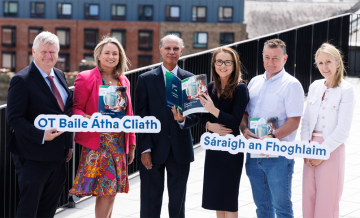
(L-R) Barry Feeney, Head of School of Enterprise Computing and Digital Transformation, TU Dublin; Susan Kelly, Operations Director, Technology Ireland ICT Skillnet; Professor Pramod Pathak, Dean, Faculty of Computing, Digital & Data, TU Dublin; Tracey Donnery, Director of Policy & Communications, Skillnet Ireland; David Kendellen, Senior Engineering Manager, Liberty IT; and Eimear Cox, Director of Engineering, Liberty IT.
Green Tech Skillnet in conjunction with University of Limerick delivered an accredited ESF+ micro-credential programme in Landscape Visual Impact Assessment (LVIA), designed to address a significant skills gap across Ireland’s planning, environmental and renewable energy sectors. The first of its kind in Europe, the course equips professionals with the practical skills needed to deliver consistent, high-quality LVIA for infrastructure and renewable energy projects, particularly wind energy. The programme responds directly to industry challenges arising from the absence of national LVIA guidance in Ireland, where differing county-level approaches can lead to inconsistency, delays and added complexity in planning and environmental assessment.
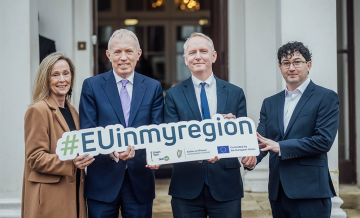
(L-R) Jeanette Gill, Development Specialist, Green Tech Skillnet; Minister of State at the Department of Climate, Energy and the Environment, Timmy Dooley TD; Dave Flynn, Director of Business Networks, Skillnet Ireland; and Mark Ruane, Renewable Energy Skills Manager, Wind Energy Ireland.
Enhancing Leadership and Innovation Across Ireland’s Regions
Regional development plays a critical role in sustaining strong economic growth across the country. Thriving regions are likely to succeed when bolstered by a workforce equipped with specialist skills. Aligning upskilling and training supports with sectoral demand and regional strengths helps build business capability across Ireland. By strengthening talent pipelines for SMEs and larger firms, Skillnet Ireland supports enterprise competitiveness and delivers tangible benefits for regional economies.
In 2025, Skillnet Ireland launched a Regional Spotlight series, which focused on the skills needs of regions across Ireland. Minister for Further and Higher Education, Research, Innovation and Science, James Lawless TD, and Minister of State at the Department of Further and Higher Education, Research, Innovation and Science, Marian Harkin TD launched the Regional Spotlight for the Midlands. The event included a panel discussion on the skills challenges affecting industries in the region, including the engineering, manufacturing and medtech sectors. Skillnet Ireland’s Ireland’s Talent Landscape report shows a strong appetite among businesses for upskilling related to the digital and green transitions. 96% of businesses surveyed in the Midlands regard their business as strong or very strong, while 62% expect a change in their core skills in the next two to three years.
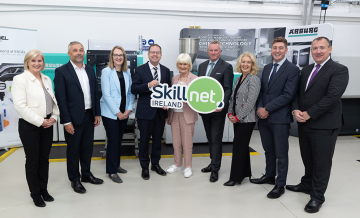
(L-R) Aoife O’Sullivan, Head of Network Development & Innovation, Skillnet Ireland; Mark McAuley, Director, Polymer Technology Ireland; Catherine Collins, Network Manager, First Polymer Training Skillnet; Minister for Further and Higher Education, Research, Innovation and Science, James Lawless TD; Minister of State at the Department of Further and Higher Education, Research, Innovation and Science, Marian Harkin TD; Mark Jordan, Chief Executive, Skillnet Ireland; Dr Ann O’Connell, Network Manager, Irish Medtech Skillnet; Eoin Morton, Head of Policy & Public Affairs, Skillnet Ireland and Eoghan Ó Faoláin, Director, Irish Medtech Association.
An Taoiseach, Micheál Martin TD attended the official launch of Waterford Chamber Skillnet’s 2025 Regional Leaders Programme. Aimed at leaders who wish to elevate their leadership competencies, the Regional Leaders Programme also benefits companies seeking to increase the leadership capacity of their internal talent pool. With a panel of business leaders from across a multitude of sectors, participants benefit from one-to-one mentoring, events including panel discussions, networking opportunities and inspiring guest speaker sessions.
Skillnet Innovation Exchange continued its regional expansion, establishing new partnerships in Cork and Cavan. Skillnet Innovation Exchange is Ireland’s innovation marketplace, connecting large companies facing digital transformation challenges, with technology solution providers that can fast-track their solutions. The new partnerships will allow globally ambitious solution providers to pitch to, and engage with, large companies seeking innovative solutions. Since it was established in 2022, Skillnet Innovation Exchange has successfully partnered with regional hubs throughout the country, while over 2,000 scaling solution providers and corporates have engaged with the National Initiative.
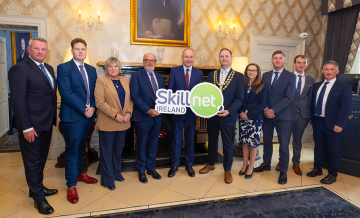
(L-R) Mark Jordan, Chief Executive, Skillnet Ireland; Tommie Ryan, Network Manager, Waterford Chamber Skillnet; Minister of State at the Department of Health, Mary Butler TD; Gerald Hurley, Chief Executive, Waterford Chamber; An Taoiseach Micheál Martin TD; Kevin Doolin, Waterford Chamber President; Tracey Donnery, Director of Policy & Communications, Skillnet Ireland; Eoin Morton, Head of Public Affairs & Policy, Skillnet Ireland; Michael Dwyer, Policy Research Advisor, Skillnet Ireland; and Johnny Doris, Development Advisor, Skillnet Ireland.
Strategic Talent Development Through Enterprise Partnerships
Skillnet Ireland continues to work collaboratively with state enterprise agencies to support enterprise capability development and workforce transformation. By connecting businesses with industry and educational expertise, these partnerships support the delivery of targeted, enterprise-focused solutions aligned with national skills and competitiveness priorities.
Developed in collaboration with IDA Ireland, the Strategic Talent Development Programme supports businesses to develop talent strategies aligned to organisational growth and long-term workforce needs. Enterprise-led and practical in design, the programme provides companies with a structured framework to align workforce planning, capability development, and organisational design with business strategy. In 2025, the programme expanded to also include client companies of Enterprise Ireland and Fáilte Ireland.
This expansion reflects the strength and adaptability of the Strategic Talent Development model and its relevance to businesses across different sectors, stages of growth, and operating environments.
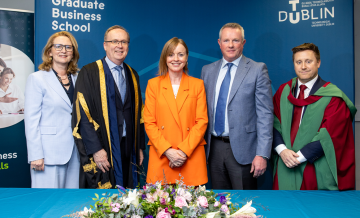
(L-R) Dr Claire McBride, Head of TU Dublin Enterprise Academy; Dr Eoin Langan, Dean, Faculty of Business, TU Dublin; Helen Burke, Head of Digitalisation, IDA Ireland; Mark Jordan, Chief Executive, Skillnet Ireland; and Dr Colin Hughes, Head of TU Dublin Graduate Business School.
Unlocking SME Innovation Potential
Pathway to Innovate is a national programme developed by Skillnet Ireland that supports scaling SMEs to take practical first steps towards innovation. The initiative targets growth-oriented businesses that are ready to scale, equipping senior leaders with the tools, frameworks and connections to embed innovation at the core of their strategy. It was successfully co-developed in partnership with five Skillnet Business Networks and National Initiatives, including IRDG Innovation Skillnet, Irish Medtech Skillnet, ISME Skillnet, Taste4Succes Skillnet and Skillnet Innovation Exchange.
This collaborative programme is designed to support SMEs by providing an expert-led entry point through structured engagement and diagnostic clinics, enabling businesses to better understand their innovation needs, opportunities, and readiness for future growth.
Pathway to Innovate links SMEs with relevant sectoral, regional, and national supports aligned to their stage of development. This collaborative approach creates an environment in which businesses can engage more effectively with programmes supporting areas such as research and development, digitalisation, sustainability, and business growth. Through regional delivery, sectoral expertise, and peer-led engagement, participating businesses benefit from practical guidance and strengthened connections across the wider innovation ecosystem.
Launched in 2025 as a pilot programme, Pathway to Innovate demonstrates the value of collaboration and of combining capability development with greater system coordination. The programme strengthens connections between local delivery and national innovation priorities, helping SMEs engage with greater clarity and confidence while supporting more effective outcomes from public investment in innovation supports.
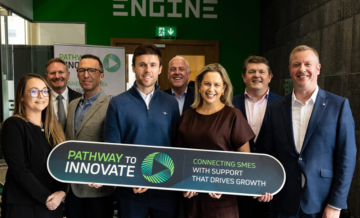
(L-R) Meghan Daly-Tyrell, Business Development Manager, RDI Hub; Ken Finnegan, Chief Strategy Officer, Skillnet Ireland; Eoin McDonnell, Head of Strategic Programmes, Skillnet Ireland; Dr Paul Byrnes, Founder of Mavarick; Conor Carmody, Programme Director, Skillnet Innovation Exchange; Sinead O’Riordan Head of Partnerships Skillnet Innovation Exchange; Dermot Casey, Chief Executive Officer, IRDG; and Dennis Barry, Chief Executive Officer, Innovate Limerick.
Supporting Talent Development and Workforce Transition
Skills Connect supports businesses in addressing evolving workforce needs while enabling individuals to reskill, upskill and access new employment opportunities in a changing economy. Developed in collaboration with enterprise, the initiative focuses on sectors experiencing skills demand and promotes the development of transferable capabilities across multiple industries. In 2025, 84,515 learners engaged in training through Skillnet Ireland, including 1,669 jobseekers who participated in Skills Connect programmes delivered across 30 Skillnet Business Networks. Skills Connect has a diverse range of programmes in industries including media, creative industries, agri-food, and technology.
During 2025, Gréasán na Meán Skillnet delivered its Broadcasting Skills for Sports Coverage programme, supporting participants to develop specialist broadcasting capabilities for live sports production. The programme equips learners with practical skills across all aspects of sports broadcasting, including pitching ideas, production planning, scheduling, financial management and live content creation.
Cultural & Creative Industries Skillnet also continued to support access pathways into employment through its Graduate Traineeship Programme for the Creative Industries. The programme combines industry-focused training with paid work placements in creative sector companies, providing participants with practical experience and mentoring from industry professionals. Designed to support recent graduates and those returning to the workforce, the programme addresses key skills gaps while helping participants secure their first role in the creative industries.
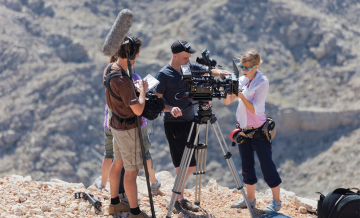
Participants on Gréasán na Meán Skillnet’s Broadcasting Skills for Sports Coverage Programme during hands-on practical training.
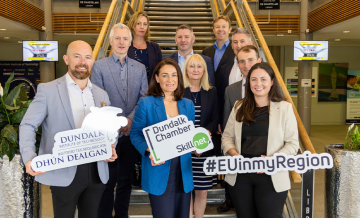
(L-R, Back) Dr Teresa O’Rourke, Programme Director DkIT; Aidan Callan, Network Manager, Dundalk Chamber Skillnet; Anton Barrett, Head of Lifelong Learning, DkIT; and Johnny Doris, Development Advisor, Skillnet Ireland. (L-R, Middle) Thomas McDonagh, Promoter, Dundalk Chamber Skillnet; Professor Collette Henry, Head of School of Business DkIT; and Michael Dwyer, Policy Research Advisor, Skillnet Ireland. (L-R, Front) Aidan Browne, Head of Innovation, Regional Development Centre; Erin McGreehan, TD and Chair of the Oireachtas Committee on Further and Higher Education; and Ruth Baker, EU Programmes Manager, Skillnet Ireland.

(L-R) Ruth Baker, EU Programme Manager, Skillnet Ireland; Nora Duggan, Commercial Lead, Irish Management Institute (IMI); Tina Maree, National Executive Officer, Irish Hospitality Institute (IHI); Shane O’Sullivan, Chief Executive, IMI; Ciara Drohan, President, IHI; Niamh O’Malley, Network Manager, Restaurant & Hospitality Skillnet; Adrian Cummins, Chief Executive, Restaurants Association of Ireland; Alan Smullen, People Manager, Doyle Collection; Patricia McGovern, Account Manager, IMI and Helen O’Leary, Programme Director, IMI.
Informing Future Skills and Workforce Development Through Research
Research plays an important role in strengthening understanding of the workforce challenges and skills needs facing businesses across Ireland. In 2025, the Skillnet Ireland Industry Insights Series published seven research reports examining emerging trends in areas including digitalisation, sustainability, workforce capability, and talent development. The reports provided practical insights into current and future skills requirements across key sectors of the Irish economy.
Skillnet Ireland launched its annual research report, Ireland’s Talent Landscape 2025: Future Skills Challenges of Irish Business, which highlighted the growing importance of workforce development in supporting innovation and competitiveness. The research found that almost two-thirds of businesses view upskilling as a strategic priority,
while 42% reported challenges sourcing employees with essential skills. The findings also highlighted increasing demand for digital and sustainability related skills, with almost 80% of businesses indicating employees will require digital upskilling in the coming years, and 66% identifying climate action and sustainability skills as an important future requirement.
The report also examined the growing role of AI within Irish businesses. Digital transformation, driven by AI, automation, and data analytics, are revolutionising how businesses operate, requiring significant re-skilling across all businesses for this new AI-driven economy. While over half of companies surveyed had not yet adopted AI technologies, 66% believed AI has the potential to support business growth within the next two years.
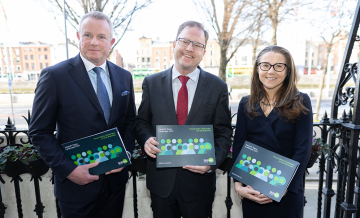
(L-R) Mark Jordan, Chief Executive, Skillnet Ireland; James Lawless TD, Minister for Further and Higher Education, Research, Innovation and Science; and Tracey Donnery, Director of Policy & Communications, Skillnet Ireland.
Food Drink Ireland Skillnet launched its Digitalisation of the Food and Drink Industry in Ireland report, examining the adoption of digital technologies across Ireland’s food and drink sector. The report highlighted that, while many businesses are actively exploring digitalisation, a significant number remain at an early stage of implementation. The research emphasised the importance of workforce capability development in supporting successful digital transformation, identifying technical, business, and transversal skills, alongside a commitment to lifelong learning, as critical enablers for the sector.
IFS Skillnet published its Learning and Development Preferences in the IFS Sector research examining learning and development trends within Ireland’s international financial services sector, which employs more than 50,000 people nationally. The study highlighted evolving employee preferences regarding learning delivery models, with digitally delivered and instructor-led virtual programmes emerging as the preferred format for many respondents. Findings highlighted the increasing importance of flexible, learner-centred approaches, including the use of case studies, simulations, and interactive learning methods. The report reinforced the importance of continuous skills development within the international financial services sector to support workforce adaptability and responsiveness in a rapidly evolving business environment.
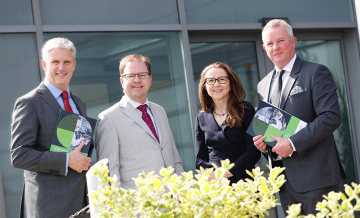
(L-R) Mark Skinner, Network Manager, Food Drink Ireland Skillnet; Minister for Further and Higher Education, Research, Innovation and Science, James Lawless, TD; Tracey Donnery, Director of Policy & Communications, Skillnet Ireland; and Mark Jordan, Chief Executive, Skillnet Ireland.
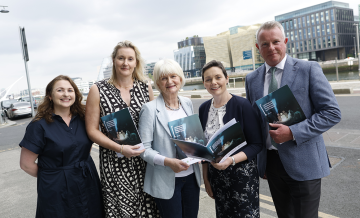
(L-R) Donna Noonan, Network Manager, IFS Skillnet; Terri Dempsey, CEO and Country Head, State Street Ireland; Minister of State for Further and Higher Education, Research, Innovation and Science, Marian Harkin TD; Patricia Callan, Director of Financial Services Ireland and Promoter, IFS Skillnet, and Mark Jordan, Chief Executive, Skillnet Ireland.
Advancing Ireland’s Skills Agenda through European Partnerships
In 2025, Skillnet Ireland continued to strengthen its role within Europe’s skills and innovation ecosystem through the delivery of EU-funded partnership projects supporting enterprise transformation, workforce development, and competitiveness. Skillnet Ireland delivered seven European partnership projects funded under Erasmus+ and Digital Europe.
These initiatives were delivered in collaboration with 115 partner organisations across 25 countries, including 48 higher education institutions. This level of engagement reflects the strength of Ireland’s skills expertise at European level and Skillnet Ireland’s continued contribution to translating EU policy priorities into practical, enterprise-focused outcomes that support innovation, productivity, and long-term economic resilience.
Projects delivered during the year supported digital transformation within healthcare through SUSA; strengthened resilience and innovation capability within the retail sector through Skills4Retail; advanced workforce upskilling in manufacturing through Reboot Skills; enhanced SME leadership capability and digital readiness through EAGLE; addressed cybersecurity skills needs through Digital4Security; strengthened digital leadership and management capability through Digital4Business; and supported the development of clean energy skills through Green Skills for Hydrogen.
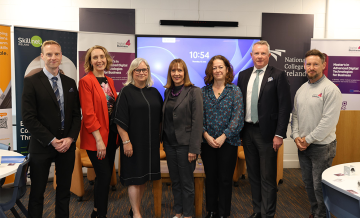
(L-R) Brian Cochrane, Senior Manager, Schuman Associates; Michelle Thompson, Strategic Partners Manager, Skillnet Ireland; Carmel Somers, Digital Technology Skills Limited; Gina Quinn, President, National College of Ireland; Laure Joachim, Head of Public Funding, The Adecco Group; Mark Jordan, Chief Executive, Skillnet Ireland; and Jeff Sheridan, Founder, Matrix.
2025 also marked a significant milestone with the successful completion of Skillnet Ireland’s first two EU co-funded partnership projects, REBOOT Skills and EAGLE. In addition to achieving their programme objectives, both projects generated valuable insights to support future skills policy and programme development.
Through sustained collaboration at European level, Skillnet Ireland is well positioned to contribute to emerging skills and innovation priorities, while supporting Irish enterprises in responding to evolving technological, digital, and sustainability-related change. By connecting European insight with national priorities and enterprise needs, these partnerships will continue to support workforce resilience, productivity, and sustainable growth across the Irish economy.
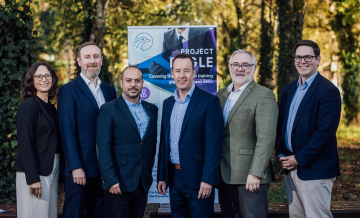
(L-R) Florence Magee, EU Projects and Partnership Manager, Skillnet Ireland; Darran Diskin, National Cyber Security Centre; Dr Bruno Baruque Zanón, Universidad de Burgos and Project Coordinator, Project EAGLE; Joe Leddin, Mid-West Regional Skills Forum Manager, Regional Skills; Michael Hennessy, Professional Education Manager, Graduate & Professional Studies, University of Limerick; and Michael MacCurtain, Network Manager, Limerick Chamber Skillnet.
Advancing Equality, Inclusion and Workforce Capability
Embedding Equality, Diversity and Human Rights
Skillnet Ireland integrates its Public Sector Equality and Human Rights Duty (Section 42 of the Irish Human Rights and Equality Commission Act 2014) to eliminate discrimination, promote equality, and protect human rights, through its broader internal Equality, Diversity, and Inclusion frameworks and policies. Skillnet Ireland regularly assesses its progress in promoting equality, preventing discrimination, and protecting the human rights of its people, industry partners, and diverse range of companies and learners supported by Skillnet Ireland.
In 2025, Skillnet Ireland conducted an Equality and Human Rights Impact Assessment and reviewed and updated a number of Skillnet Ireland policies including the Customer Charter, Customer Action Plan, Quality of Service Statement and Employee Handbook. In addition, Skillnet Ireland undertook a review of the Skillnet Network Operating Guidelines and introduced a new Equality Policy which will be introduced across Skillnet Ireland’s Networks and Initiatives. Skillnet Ireland was pleased to retain its Diversity Bronze accreditation awarded by the Centre for Diversity in 2025.
Skillnet Ireland is committed to fostering a diverse, inclusive and fulfilling working environment for all our people and for all those we provide services to. Skillnet Ireland plans to publish its public sector duty assessment and action plan in 2026.
Strengthening Gender Diversity in STEM
Irish Medtech’s business networks, First Polymer Training Skillnet, Irish Medtech Skillnet and Connected Health Skillnet collaborated to examine female participation in technical and leadership roles in the health technology industry as well as key actions that industry, academia and the Networks can take to support companies in achieving better gender parity while also developing more diverse talent pipelines. By strengthening understanding of barriers and enablers, the Skillnet Business Networks can better support companies through targeted training and sharing of best practice across the health technology sector. This report highlights the need to strengthen and diversify Ireland’s STEM talent pool, particularly within the rapidly evolving health technology sector, and emphasises the critical role of upskilling in addressing the gender imbalance across STEM sectors. It outlines how upskilling is key to ensuring a more inclusive and robust talent pipeline to meet the sector’s needs and support its long-term competitiveness.

(L-R) Yvonne O’Byrne, Irish Medtech Skillnet; Eoghan Ó’Faoláin, Irish Medtech; Jackie Murphy, Alcon; Ann O’Connell, Irish Medtech Skillnet; Catherine Collins, First Polymer Training Skillnet; and Jennifer McCormack, Connected Health Skillnet.
Skillnet Business Networks and National Initiatives 2025
In 2025 our Industry Partners supported businesses in a wide range of sectors and regions across Ireland.

A
Aviation Skillnet
B
BioPharmaChem Skillnet
C
Carlow Kilkenny Skillnet
Chartered Accountants Ireland Skillnet
CILT Mobility & Supply Chain Skillnet
CitA Skillnet
Cobotics Skillnet
Connected Health Skillnet
Construction Professionals Skillnet
Cork Chamber Skillnet
County Tipperary Chamber Skillnet
County Wexford Chamber Skillnet
Cultural & Creative Industries Skillnet
D
Design Skillnet
Design, Print & Packaging Skillnet
Dundalk Chamber Skillnet
E
Employment & Recruitment Federation Skillnet
Engineering Skillnet
F
Farm Business Skillnet
Fingal Chamber Skillnet
First Polymer Training Skillnet
Food Drink Ireland Skillnet
G
Galway Executive Skillnet
Gréasán na Meán Skillnet
Green Tech Skillnet
I
ICBE Advanced Productivity Skillnet
ICBE Business Excellence Skillnet
ICOS Skillnet
IFS Skillnet
IMAGE Skillnet
Industry 4.0 Skillnet
IRD Duhallow Skillnet
IRDG Innovation Skillnet
Irish Hotels Federation Skillnet
Irish Medtech Skillnet
ISME Skillnet
itag Skillnet
L
L&D Skillnet
Law Society Skillnet
Leading Healthcare Providers Skillnet
Learning Waves Skillnet
Leisure, Health & Fitness Skillnet
Limerick Chamber Skillnet
M
M1 Drogheda Chamber Skillnet
Macra Agricultural Skillnet
MentorsWork
MIDAS Electronic Systems Skillnet
Midland Border East Skillnet
N
National Organic Training Skillnet
Next Level Skillnet
P
Positive2Work Skillnet
R
Restaurant & Hospitality Skillnet
Retail Ireland Skillnet
Rural Enterprise Skillnet
Rural Food Skillnet
S
Skillnet Climate Ready Academy
Skillnet Innovation Exchange
Skillnet MMC Accelerate
Skillnet Offshore Wind Academy
Shannon Chamber Skillnet
SIMI Skillnet
Sligo Chamber Skillnet
South Kerry Skillnet
South West Gnó Skillnet
Space Industry Skillnet
Sustainable Enterprise Skillnet
Sustainable HRM Skillnet
T
Taste 4 Success Skillnet
Tech Industry Alliance Skillnet
Tech Northwest Skillnet
Technology Ireland DIGITAL Skillnet
Technology Ireland ICT Skillnet
W
Waterford Chamber Skillnet
X
XL Vets Skillnet
