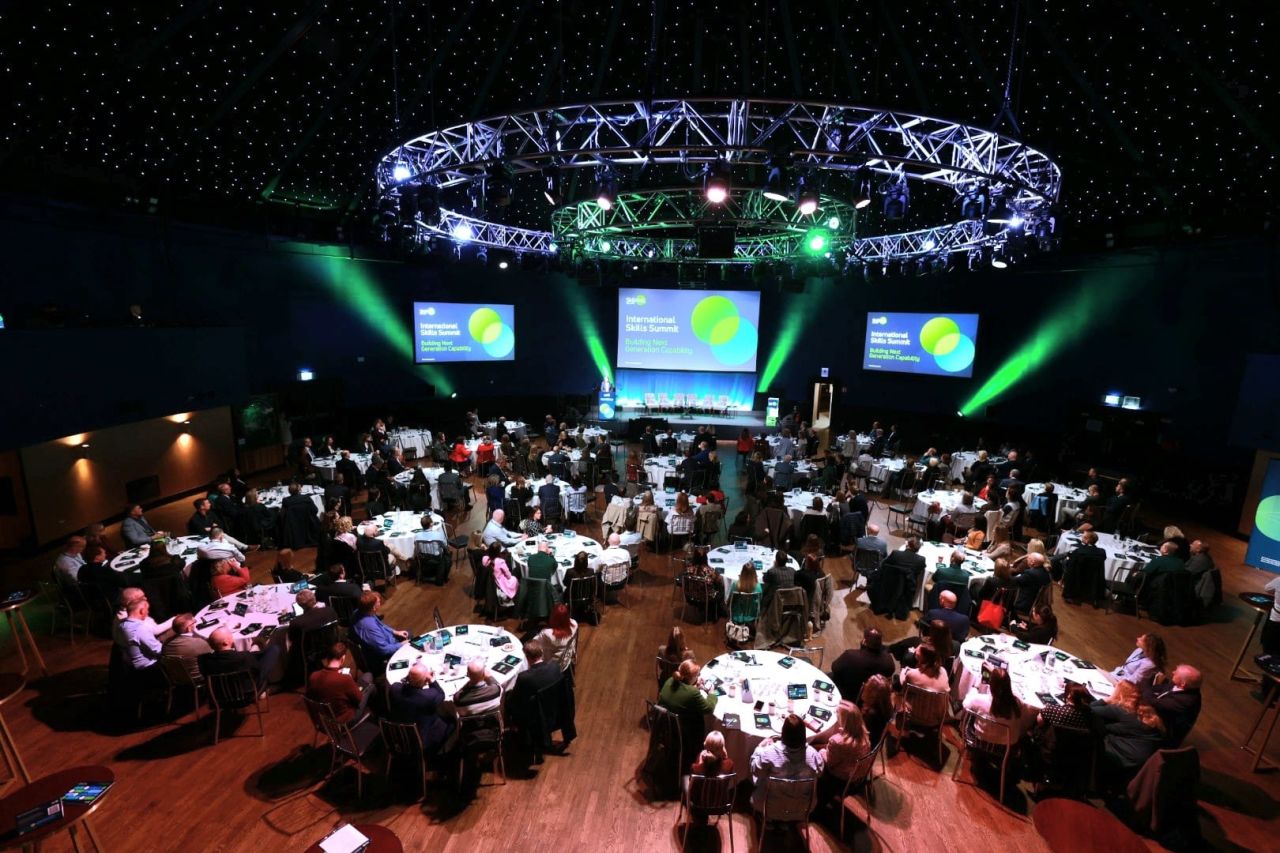

On October 21st, Skillnet Ireland welcomed colleagues from enterprise, government, public agencies, education, and European partners to the Mansion House for its International Skills Summit 2026. With the theme of 'Building Next Generation Capability’, the summit examined the future of skills, talent, leadership and AI transformation, while also considering the human capabilities that remain essential to innovation, productivity and business competitiveness.
Opening the event, Skillnet Ireland Chief Executive Mark Jordan outlined the strategic importance of workforce capability to Ireland's future economic success, highlighting how continuous investment in skills development is essential to maintaining Ireland's position as a competitive and innovative economy.
“Skills underpin productivity, competitiveness and resilience. They enable businesses to innovate and compete, empower people to adapt and build meaningful careers, and give economies the capacity to respond confidently to disruption. At Skillnet Ireland, we see that connection every day - businesses embracing transformation, workers developing new capabilities, and industries collaborating to solve shared challenges,” Mark said.
The summit brought together a distinguished line-up of national and international experts to explore the opportunities and challenges shaping the future of work. Discussions throughout the day focused on the critical role of skills in driving productivity, supporting business growth and enabling organisations to adapt to rapid technological change.
A highlight of the morning programme was the panel discussion, 'Future Skills for EU Competitiveness', moderated by Dr Claire McBride, Head of the Enterprise Academy at TU Dublin. Panellists - including David Geary, CEO of European Movement Ireland; Sharon Higgins, Executive Director, Membership & Sectors, Ibec; Colm Kelly, Chair of the Expert Group on Future Skills Needs; Larisa Panait, Head of Skills and Jobs at EuroChambres; and Glenda Quintini, Head of the Skills and Future Readiness Division at the OECD - examined the skills priorities that will shape Europe's economic future.
The discussion highlighted the growing importance of collaboration between government, industry and education providers in developing agile and responsive skills systems that can meet evolving workforce needs and support long-term competitiveness across Europe.
The summit also showcased the impact of skills development at enterprise level. During a session on empowering the next generation of talent, attendees heard from Maebh O'Malley, co-owner of Achill Island Sea Salt, who spoke about how the company was able to scale successfully with support from Taste 4 Success Skillnet, and the value of the Network's BrandBite, brand acceleration programme. Ms O'Malley shared insights into entrepreneurship, business growth and the role that investment in people can play in helping organisations succeed.
The afternoon programme had a strong focus on artificial intelligence and leadership. Tracey Donnery, Director of Policy & Communications at Skillnet Ireland, examined the leadership capabilities required to successfully navigate AI transformation.
"AI capability must be underpinned by digital maturity and matched by human capability," Tracey said.
"That is why Skillnet Ireland is investing in research that shows what us actually happening in workplaces across Ireland: how organisations are using AI, where value is being created, what barriers exist, and what capabilities leaders and employees will need to succeed."
A panel discussion on 'Scaling AI Skills & Capabilities' brought together experts from across industry, policy and workforce development. Moderated by Aoife O'Sullivan, Skillnet Ireland Head of Network Development & Innovation, the panel included Dr Kevin Marshall, Chairperson of the National Skills Council; Daniel Moritz Payer, Senior Education Policy Advisor at the Austrian Federal Economic Chamber; Laura Plunkett, EDIH Programme Manager at CeADAR; and Ken Finnegan, Chief Strategy Officer at Skillnet Ireland.
The panel explored how organisations can build AI readiness, develop critical digital capabilities and ensure that businesses of all sizes can benefit from emerging technologies. Speakers stressed that while AI is transforming workplaces, investment in people and skills remains the key factor in delivering successful outcomes.
Closing the summit, Skillnet Ireland Chairperson Brigid McManus reaffirmed the importance of collaboration, innovation and lifelong learning in building the workforce capabilities needed for the future.
"Today has reinforced that Ireland is well positioned for what lies ahead. We have a strong skills ecosystem, an enterprise-led model, innovative businesses, and committed partners. Our task is to carry the ideas and connections from this room into action during Ireland’s Presidency and well beyond it. Let us use this moment to build the next-generation capability that will strengthen Ireland and contribute to a more competitive, resilient and inclusive Europe," Brigid said.
Bringing together representatives from Government, industry, education and enterprise, the International Skills Summit reinforced the importance of collaboration in addressing future skills challenges. Beyond the insights shared on the day, the event served as a platform for building relationships, exchanging ideas and strengthening partnerships that will support ongoing progress in building the next generation capability needed for future competitiveness.

Stay connected with Skillnet Ireland
Receive regular news and insights from the world of workforce development straight to your inbox.
By adding my email, I agree to the use of my personal data in accordance with Skillnet Ireland's Privacy Policy.
